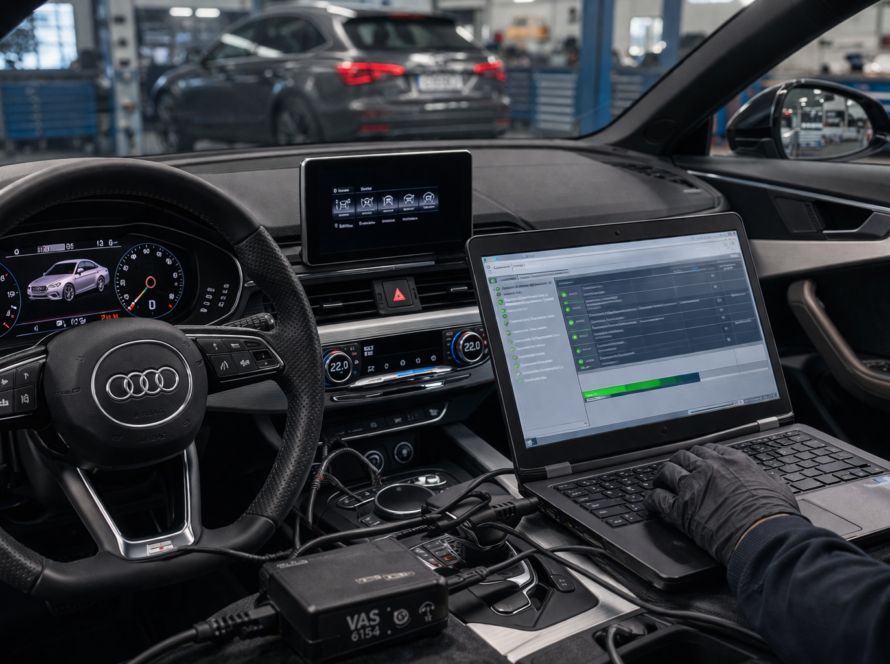
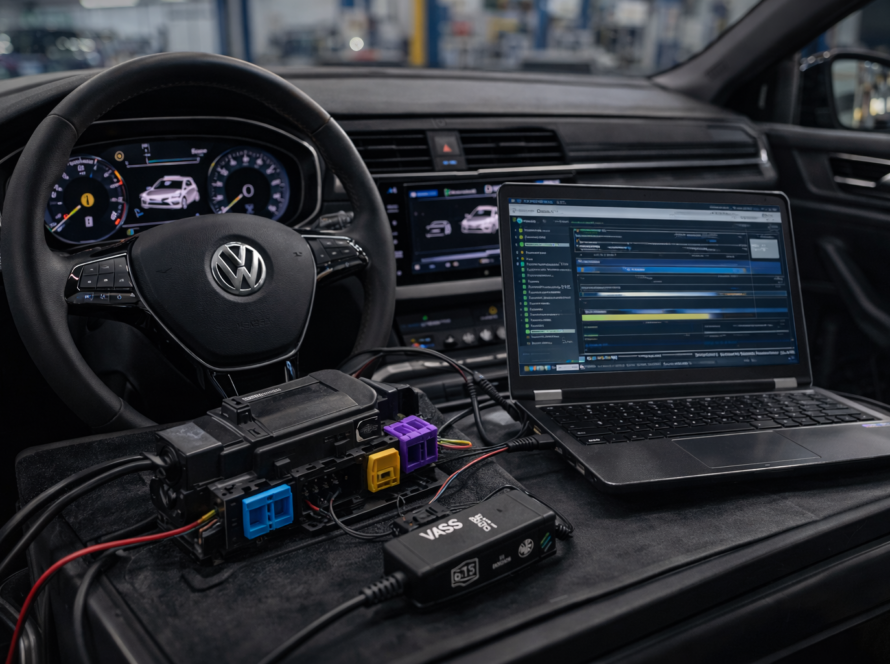
SFD (Schutz Fahrzeug Diagnose) — which translates from German as Vehicle Diagnostic Protection — is an advanced security system developed by Volkswagen Group to protect the electronic control units (ECUs) and software modules in modern VAG vehicles from unauthorized access, manipulation, and tampering.
As vehicles become increasingly software-defined and connected, the importance of protecting onboard systems from unauthorized modification has grown dramatically. SFD protection represents Volkswagen’s direct response to this challenge, forming a core pillar of the group’s broader vehicle cybersecurity strategy.
SFD is not simply a password or a basic access restriction. It is a sophisticated, server-authenticated protection layer that governs which operations can be performed on a vehicle’s control modules, by whom, and under what circumstances. Understanding this system is no longer optional for technicians working on modern Volkswagen Group vehicles — it is an essential competency.
Why Did Volkswagen Introduce SFD Protection?
The automotive industry has undergone a fundamental transformation over the past decade. Modern vehicles contain dozens of interconnected electronic control units running complex software, and many of these systems are now accessible remotely or via standard diagnostic interfaces. This connectivity, while enabling powerful diagnostic and update capabilities, also creates significant cybersecurity risks.
Without adequate protection, control modules could be accessed and modified by unauthorized tools or individuals, potentially leading to:
- Manipulation of safety-critical systems such as braking, steering, or airbag control
- Unauthorized performance modifications that compromise emissions compliance
- Odometer tampering and fraud
- Bypassing of immobilizer or anti-theft systems
- Installation of counterfeit or incompatible software that damages vehicle systems
SFD protection was introduced specifically to address these vulnerabilities. By requiring server-side authentication before any sensitive diagnostic operation can proceed, Volkswagen ensures that only authorized, verified technicians using approved tools can make meaningful changes to a vehicle’s electronic architecture.
How Does SFD Protection Work?
The SFD system operates on a principle of centralized authorization combined with temporary local access. Here is how the process works in practice:
1. Module Lock Detection
When a technician attempts to perform a coding, adaptation, or programming procedure on an SFD-protected module using ODIS diagnostic software, the system first checks the protection status of the target module. If the module is SFD-protected, the diagnostic software immediately recognizes the lock and displays a notification indicating that the module cannot be accessed without authorization.
2. Authentication Request
The diagnostic software — typically ODIS Service or ODIS Engineering — initiates a communication session with Volkswagen’s backend servers. This request includes identifying information about the vehicle, the specific module, the operation being requested, and the credentials of the technician or workshop initiating the procedure.
3. Server-Side Verification
Volkswagen’s servers evaluate the incoming authentication request. The server checks:
- Whether the technician’s account and workshop are authorized to perform the requested operation
- Whether the specific vehicle and module are registered correctly in the system
- Whether the requested procedure is permitted under the current authorization level
4. Temporary Module Unlock
If all conditions are satisfied, the server issues a temporary authorization token that allows the diagnostic software to proceed with the requested operation. This unlock is not permanent — it applies only to the specific procedure being performed and expires after the session ends or a defined time period passes.
5. Operation Completion and Re-lock
Once the authorized procedure is completed, the module returns to its protected state. This means that every new diagnostic session requiring access to SFD-protected functions must go through the full authentication process again. There is no persistent “unlocked” state that could be exploited.
Which Vehicles and Modules Are Affected by SFD?
SFD protection is increasingly deployed across the Volkswagen Group brand portfolio, including Volkswagen, Audi, ŠKODA, SEAT, Cupra, and Porsche vehicles built on modern platforms. The system is most prevalent in vehicles based on:
- MQB (Modular Transverse Matrix) platform — including Golf 8, Octavia 4, Tiguan 2, and related models
- MEB (Modular Electric Drive Matrix) platform — including ID.3, ID.4, ID.5, and other electric vehicles
- MLB evo platform — including Audi A4, A5, A6, A7, A8, Q5, Q7, and Q8 models
- PPE (Premium Platform Electric) — Audi Q6 e-tron, Porsche Macan EV
The modules most commonly protected by SFD include but are not limited to:
- Engine control units (ECU)
- Transmission control modules
- Gateway modules
- Driver assistance system controllers
- Infotainment and connectivity modules
- Instrument clusters
- Battery management systems (in electric vehicles)
As Volkswagen continues to roll out software-defined vehicle architectures, the scope of SFD protection is expected to expand further with each new model generation.
What Operations Require SFD Authentication?
Not every diagnostic operation triggers SFD protection. Routine tasks such as reading fault codes or viewing live data typically do not require SFD authentication. However, the following types of operations commonly require SFD unlocking:
- ECU coding and recoding — changing module configuration parameters
- Software flashing and updates — writing new software versions to control modules
- Adaptation channel modifications — adjusting module behavior through long-coding or adaptation values
- Component protection procedures — pairing replacement modules to a vehicle
- Variant coding — enabling or disabling optional features
- Security access operations — procedures requiring elevated diagnostic privileges
Essentially, any operation that writes data to or fundamentally changes the behavior of a protected module will require SFD authentication.
Tools and Software Required for SFD Authentication
To successfully perform SFD authentication, technicians need the correct combination of hardware, software, and account authorization:
ODIS Software
ODIS Service is the primary diagnostic software used for SFD authentication in authorized Volkswagen workshops. It is the official Volkswagen Group diagnostic platform and is the only tool that supports full SFD communication with backend servers. ODIS Engineering may be used for more advanced procedures in specific contexts.
VAS Diagnostic Interface
A compatible VAS (Vehicle Analysis System) interface is required to establish communication between the diagnostic computer and the vehicle. Only approved VAS hardware supports the full range of SFD-authenticated procedures.
Active Internet Connection
SFD authentication is an online procedure. A stable, reliable internet connection is mandatory for the diagnostic computer throughout the entire authentication and coding process. Any interruption during an active SFD session can result in errors or an incomplete procedure.
Valid Technician Account and Workshop Authorization
The technician must have a valid, active ODIS account associated with an authorized Volkswagen Group workshop. The account must have the appropriate access level for the type of operation being requested. Accounts with insufficient authorization levels will receive a rejection from the server during the authentication step.
Common Issues During SFD Authentication
Even in well-equipped workshops, SFD authentication can sometimes encounter problems. The most frequently reported issues include:
Authentication Failure Due to Network Issues
An unstable internet connection is the leading cause of SFD authentication failures. Because the entire process depends on real-time server communication, even brief network interruptions can cause the authentication handshake to fail. Dedicated, wired internet connections for diagnostic computers are strongly recommended.
Expired or Insufficient Account Credentials
If the technician’s ODIS account has expired, been suspended, or lacks the required authorization level for the operation, the server will reject the authentication request. Regular account maintenance and awareness of authorization levels are essential.
Module Not Registered in Backend System
In rare cases — particularly with recently produced vehicles or newly released module variants — the backend system may not yet have a complete registration for the specific module. This can cause authentication to fail even when everything else is in order.
ODIS Version Incompatibility
Running an outdated version of ODIS may result in communication errors with the SFD authentication servers, as Volkswagen periodically updates both the client software and the server protocols.
VPN and Firewall Interference
Workshop network configurations that include VPN solutions or restrictive firewalls may inadvertently block the ports and communication protocols used during SFD authentication. IT administrators should ensure that ODIS traffic is properly permitted through all network security layers.
Best Practices for Working with SFD-Protected Modules
To minimize errors and ensure smooth SFD authentication procedures, technicians and workshop managers should adopt the following best practices:
- Use a dedicated wired internet connection for diagnostic workstations to ensure maximum stability during online procedures
- Keep ODIS software updated to the latest available version at all times
- Verify account credentials and authorization levels before beginning any SFD-dependent procedure
- Do not interrupt the process once an SFD authentication session has begun — complete all steps without disconnecting the vehicle or the network
- Use only approved VAS hardware — third-party interfaces may not support SFD communication
- Plan procedures in advance to avoid time pressure during authentication sessions
- Contact Volkswagen technical support promptly if authentication repeatedly fails, as some issues require server-side resolution
SFD Protection and the Future of Vehicle Cybersecurity
SFD protection is part of a broader industry-wide movement toward securing vehicle software ecosystems. As vehicles evolve into sophisticated connected platforms with over-the-air update capabilities, the attack surface for potential cybersecurity threats grows alongside the technology.
Volkswagen’s implementation of SFD reflects compliance with emerging regulatory frameworks such as UN Regulation No. 155 (UN R155), which mandates that vehicle manufacturers implement cybersecurity management systems for all new vehicle types. This regulation, now in force across the European Union and many other markets, requires manufacturers to actively protect vehicle systems from unauthorized access throughout the vehicle’s operational life.
From this perspective, SFD protection is not simply a technical feature — it is a regulatory requirement and a statement of commitment to responsible, secure vehicle design. Technicians who understand and work fluently with SFD authentication are therefore not only better equipped for today’s workshop challenges but also well-positioned for the increasingly security-conscious automotive landscape of the future.
Summary
SFD protection is Volkswagen Group’s server-authenticated security system that protects control modules in modern VAG vehicles from unauthorized coding, programming, and adaptation. When a technician attempts to access an SFD-protected module, ODIS must communicate with Volkswagen’s backend servers to verify authorization before a temporary unlock is granted.
The system is increasingly standard across new vehicle platforms including MQB, MEB, MLB evo, and PPE, and covers a wide range of critical control modules. Successful SFD authentication requires up-to-date ODIS software, approved VAS hardware, a stable internet connection, and a valid authorized technician account.
As vehicle cybersecurity regulations tighten globally, familiarity with SFD protection and its authentication procedures will become an indispensable part of professional competency for anyone working with Volkswagen Group vehicles.
Need help? We are here for you. whatsapp: +420773585568 mail: info@odisonline.eu
ODISONLINE.EU